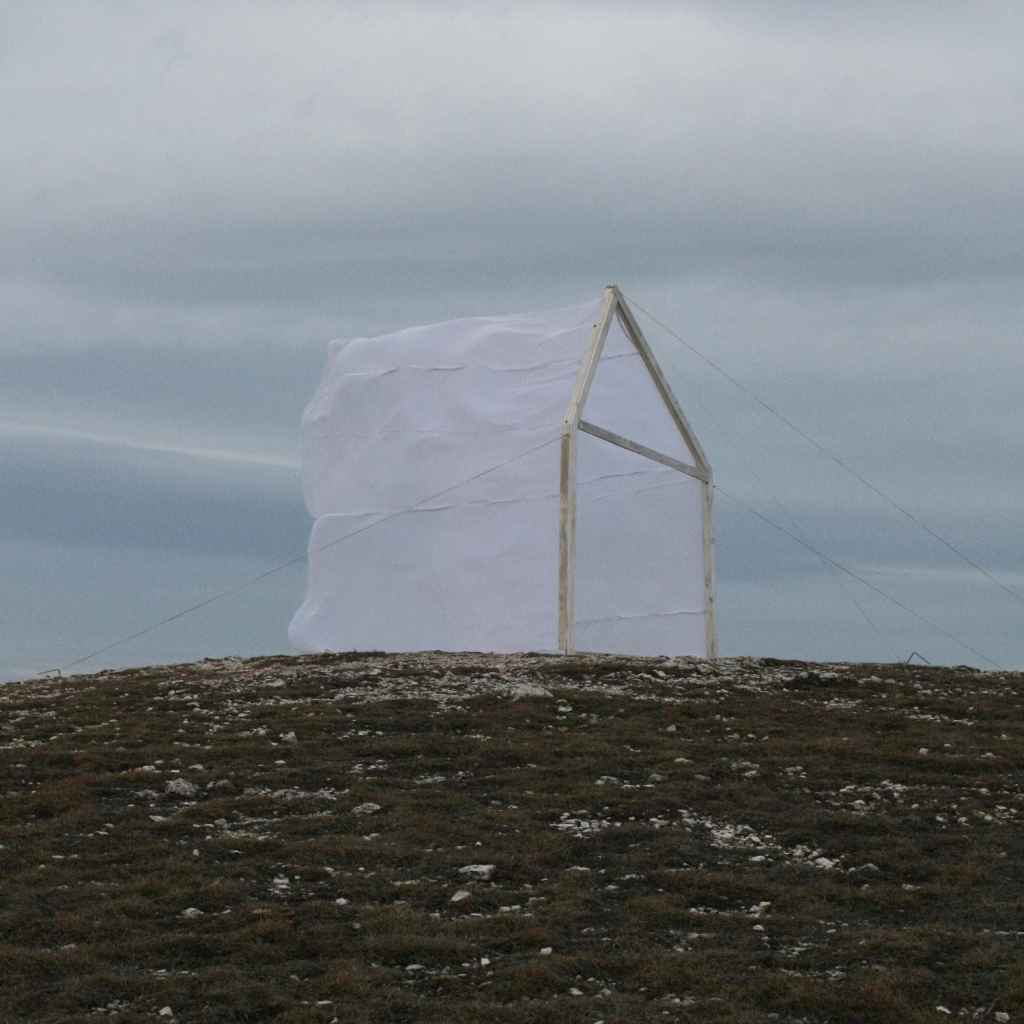
I loved the first For Those I Love album, released back in 2021. I was a few months late to it, but was instantly taken on first listen. It is a record absolutely brimming with love and pain in equal measure, with its narrative of youthful abandon and heartbreaking loss soundtracked by dancefloor-ready instrumentals. It left me wanting more from David Balfe, the man behind the project, even if I wondered where he’d go next. The first album did such a thorough job of fulfilling the name of his project. So, appropriately, four years later, Balfe returns with a very different record.
Balfe widens the scope on Carving The Stone to cover his past, present and future relationship with his Irish homeland. It’s a much broader and ambitious focus. Other artists have attempted the audacious sequel (the high watermark for this in my eyes is Kendrick Lamar’s To Pimp A Butterfly, where he moved his focus from the personal world of his major label debut to the world at large), and few succeed. But lyrically at least, Balfe is up to the task.
Carving The Stone is angry, conflicted, and often beautiful. You can hear the vitriol that pulses through ‘No Scheme’ as our narrator resents having to join the middle-class rat race that he railed against on the prior record’s ‘Top Scheme’. “There’s rent to pay so I trade my soul in as labour, and stay for the hope of what might be”, he rages. ‘The Ox / The Afters’ is an engrossing short story about an affectionately remembered local boxer. It’s teeming with intricate detail about the “stocky Dublin Rocky” who was doomed by alcohol. ‘This Is Not The Place I Belong’ has a mantra-like chorus where Balfe protests “I do my work, I stay involved, I pay my rent, pray for a god” and yet he sounds hopeless as the country pays him nothing back. And ‘Of The Sorrows’, despite its positioning towards the end of the record, is the album’s centrepiece. It’s an incredibly powerful and honest appraisal of his relationship with Ireland. Grabbing a quote or two won’t do it justice, but he sounds like a broken man as he lists all the reasons to let the head rule the heart, and leave. It’s outstanding writing, and Balfe is a deeply compelling protagonist.
But the sound of this record is just as striking. Reflecting the conflicted nature of the words, Carving The Stone is musically dense. Its predecessor’s club-ready instrumentals have been replaced, and while they’re still based around electronic music, the sonic choices here often owe more to post-punk, rock and traditional Irish music – sometimes simultaneously. When hearing ‘Of The Sorrows’ as the lead single I was initially confused. As the song builds, I expected a release akin to the drops on the ravey mixes of the last record, but instead we get what sounds like a chorus of fiddles played alongside pounding drums. But on repeat plays, the density of the music effectively conveys the conflict in our narrator’s mind. The pounding synths and drums of ‘Mirror’ reflect the anger and anxiety when contemplating the way “young workers” are manipulated by “modern nationalist cunts”. Breathless percussion and wailing guitars are used on ‘The Ox / The Afters’ to accelerate towards a conclusion as the song’s subject meets his demise. ‘No Quiet’ uses gentle piano chords and ominous guitars to accompany the story of a woman whose loved ones have been lost to the environment in which she lives. When listened to as a whole, the sound has a highly immersive effect.
It’s angry, heavy stuff, and once again Balfe pours his heart into this record. The challenge with lyrically foregrounded albums like this is to strike the balance between the words and the music, and occasionally, Balfe’s urgency to say everything risks tipping the scales. While it rewards full-length listens, not too much stands out in isolation. Carving The Stone certainly doesn’t have the straightforward thrills of the last record and I didn’t often find myself going back to individual tracks. And the ambitious idea of mirroring the conflict in the music doesn’t always fully work. ‘Of The Sorrows’ is lyrically rich, but while I can appreciate the concept of its conclusion, it still does feel a little incongruous as the conflicting sounds are mashed together. It’s a similar case on the title track; it aims for an epic conclusion, but sounds somewhat muddled.
This is easily forgiven for the many moments when he nails it though. Sampling was a device used to devastating effect at the conclusion of the previous record, and again here, there are a couple of moments where he cuts the music to reveal a bare, almost acoustic recording of someone singing. On both ‘No Quiet’, and the album’s closer, ‘I Came Back To See The Stone Had Moved’, the tension dissipates and sweetly sung Irish folk songs come in. As the female singer sings “it’s only black water that runs down from my land” on the final track, the effect is quietly devastating.
But the most powerful moment lands on ‘Civic’, right in the middle of the record. A song that contrasts the passion of youth with the tedium of adult life, the instrumental is fairly light and airy for the first two verses as he weaves in and out of past and present. But then the beat cuts out and crunching electric guitars come in, with Balfe drilling down into the vivid memory of burning a Honda Civic in the name of art. As the guitars grind you can see the fire in his eyes and the flames in his heart. “Seventeen and committed to both the art and my kinship, back then nothing was scripted and we bled for existence.” A man raging against the dying of the light on one of the songs of the year. A singular artist delivering an accomplished second album, a record as packed with heart and soul as any you’ll hear.
Words by Tom Burrows


Leave a comment